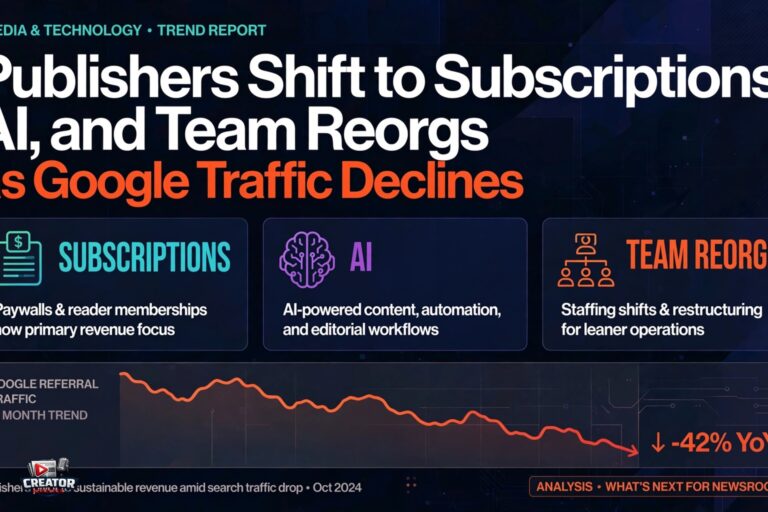
Publishers are actively reshaping their business models in response to declining referral traffic from Google, according to a Digiday report dated October 20, 2026. As search-driven visibility wanes, media organizations are turning to three core strategies: building direct subscription relationships, leveraging AI for content discovery and production, and reorganizing newsroom teams to align with new priorities. These shifts reflect a broader industry move away from reliance on third-party platforms toward owned audience ecosystems.
The subscription push focuses on converting casual readers into paying members through niche content, newsletters, and community offerings. Publishers are investing in membership tiers, paywall technology, and retention tactics to create predictable revenue streams less vulnerable to algorithmic changes. This approach allows creators and editors to deepen engagement with loyal audiences while reducing dependence on volatile traffic sources.
Artificial intelligence is being deployed not just for automation, but to enhance content visibility and personalization. AI tools help publishers optimize headlines, recommend articles, and adapt content formats for different platforms—without relying on Google’s search rankings. By using AI to surface relevant stories to existing users, publishers aim to increase time on site and subscription conversion rates from within their own ecosystems.
Simultaneously, newsroom structures are being reevaluated to support these new goals. Teams are being restructured around audience segments, product functions, and revenue streams rather than traditional editorial desks. Cross-functional collaboration between editorial, product, and data teams is increasing, enabling faster experimentation with subscription models and AI-driven features. These organizational changes aim to break down silos and create agile units capable of responding quickly to audience behavior.
For content creators, this transition underscores the importance of building direct relationships with audiences and experimenting with monetization beyond ad-supported, search-dependent models. The post-Google playbook emphasizes ownership, innovation, and internal alignment as key to long-term sustainability in a fragmented digital landscape. Creators who adopt similar strategies—prioritizing subscriptions, using AI thoughtfully, and aligning team structures with goals—may find greater resilience in an evolving media environment.
Join the conversation
Load Facebook comments to read and reply using your Facebook account.
