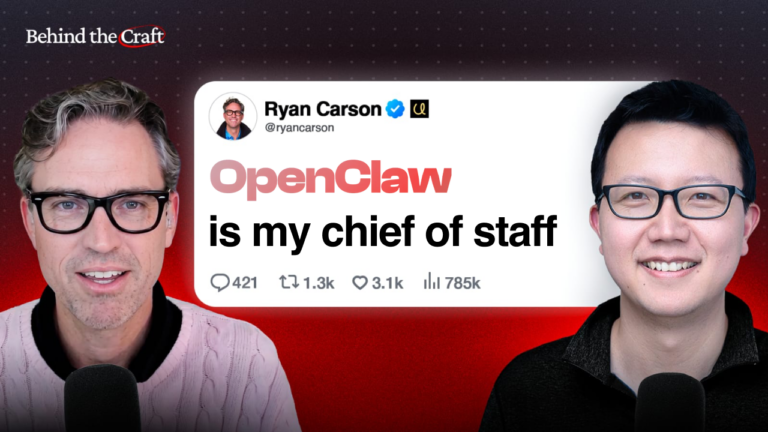
Ryan Carson, a founder who has launched five startups, recently shared a detailed look at how he runs his current venture largely on his own. In a video posted to Creator Economy on May 24, 2026, he walks viewers through the exact configuration of three AI agents—OpenClaw, Codex, and Devin—that handle core operational functions for his business.
According to the demo, OpenClaw is responsible for booking meetings, coordinating calendars, and managing follow‑up communications. Codex takes charge of running advertising campaigns, including audience targeting, budget allocation, and performance monitoring. Devin focuses on shipping product features, automating code integration, testing pipelines, and deployment processes. Carson emphasizes that these agents work continuously, allowing the workflow to progress even while he is offline or asleep.
The creator‑business angle highlighted in the presentation is the potential for solo founders to offload repetitive, time‑intensive tasks to specialized AI systems. By delegating meeting scheduling, ad management, and feature deployment, Carson can redirect his attention toward higher‑level activities such as product vision, customer engagement, and strategic planning. This shift illustrates how AI agents can act as force multipliers for individuals who lack large teams but still aim to scale their operations.
While the video does not disclose specific metrics or pricing details, it shows the agents operating in tandem, each triggering actions based on predefined conditions and real‑time data. The asynchronous nature of the setup means that tasks initiated during one time zone can be completed in another, creating a near‑continuous production cycle without constant human oversight.
For other creators and indie founders considering similar automation, Carson’s example underscores the importance of clearly defining agent responsibilities, establishing reliable triggers, and maintaining oversight to ensure alignment with business goals. The demonstration serves as a practical illustration of how combining multiple AI tools can support a lean, solo‑run startup while still delivering consistent output across key functional areas.
Join the conversation
Load Facebook comments to read and reply using your Facebook account.
