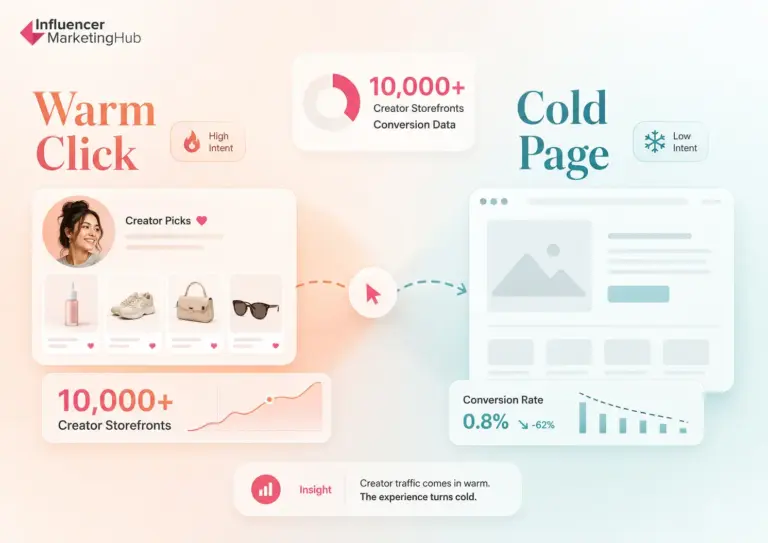
Brands running creator affiliate programs are reporting significant conversion rate improvements—some as high as 214%—when creators drive traffic to dedicated storefronts, according to new data from Influencer Marketing Hub analyzing over 10,000 creator storefronts. The findings highlight a stark contrast: while brands benefit from increased sales attributed to creator referrals, many creators themselves are not seeing proportional returns on their effort. This disconnect points to what analysts are calling the “warm click, cold page” problem—where audience intent is high upon clicking a creator’s link, but the destination storefront fails to convert that interest into purchases.
The data does not specify which verticals or platforms saw the highest lifts, nor does it break down performance by creator tier or audience size. However, the implication is clear: even when creators successfully drive engaged traffic, the storefront experience—often a generic, brand-controlled landing page—may lack the personalization, trust signals, or seamless checkout flow needed to close sales. For creators monetizing through affiliate links or branded storefronts, this means investing time in promotion without guaranteed revenue payoff, especially if the page feels impersonal or misaligned with their usual content aesthetic.
From a business standpoint, creators should scrutinize the storefronts they’re directed to use. Are they customizable? Do they reflect the creator’s voice? Are product pages optimized for mobile and fast loading? Legal and policy risks also arise if creators are required to promote storefronts that make unverified claims or lack proper disclosures—potentially undermining audience trust. Sponsorship agreements should include clauses that allow creators to review or suggest improvements to landing pages, particularly when their name and reputation are tied to the outcome.
Ultimately, the data underscores a growing tension in creator-commerce: brands gain measurable performance lifts, but creators bear the reputational and opportunity cost when conversion fails. Until storefronts are designed with both brand goals and creator-audience relationships in mind, the “warm click” will continue to cool at the page. Creators treating storefront performance as a shared KPI—not just a brand metric—will be better positioned to negotiate fair terms and protect their long-term credibility.
Join the conversation
Load Facebook comments to read and reply using your Facebook account.
