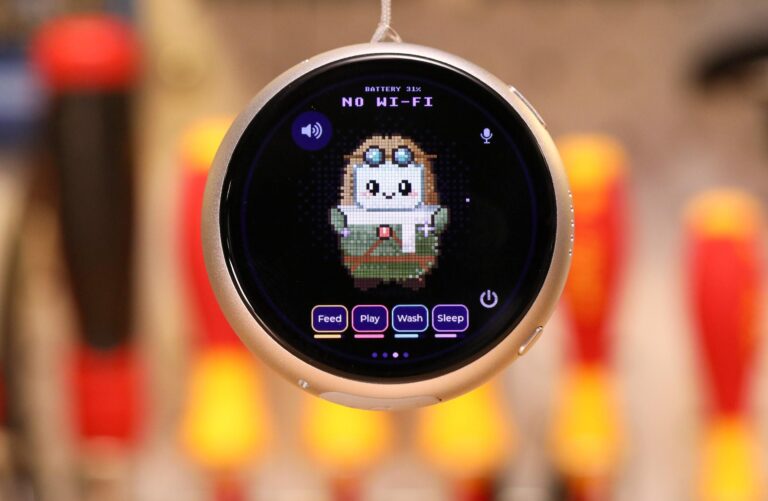
As Meta prepares to launch its Muse Charm — a wearable AI companion designed to resemble a digital Tamagotchi with a squishy, expressive face — creators worldwide are already one step ahead. Long before the holiday rollout was announced, independent builders had begun crafting personalized AI companions using accessible tools like the ESP32 microcontroller and open-source voice models such as Claude. These grassroots projects aren’t just replicas; they reflect a growing movement where content creators prioritize customization, privacy, and hands-on innovation over off-the-shelf consumer gadgets.
The Muse Charm, positioned by Meta as a festive, emotionally engaging AI sidekick, aims to blend companionship with utility in a compact, wearable form. Yet, according to early reports from The Verge, the device’s appeal lies more in its nostalgic design than groundbreaking functionality — a detail not lost on the maker community. Instead of waiting for corporate releases, many creators have opted to build their own versions, integrating local LLMs, tactile feedback systems, and even biometric sensors to tailor interactions to their creative workflows.
This DIY approach offers distinct advantages for content creators: full control over data privacy, the ability to modify personality traits or response styles, and freedom from subscription dependencies. Unlike Meta’s closed ecosystem, these homemade AI charms can be programmed to remind users of shoot schedules, suggest editing ideas, or even simulate conversational partners for solo creators working in isolation. The result isn’t just a gadget — it’s a personalized creative co-pilot.
While Meta’s Muse Charm may capture mainstream attention this holiday season, its true significance may lie in validating a trend that creators have been leading for months: the desire for AI that feels less like a product and more like a collaborator. By embracing open hardware and adaptable software, the maker community continues to prove that the most meaningful innovations often start not in boardrooms, but on workbenches — long before the big names catch on.
Join the conversation
Load Facebook comments to read and reply using your Facebook account.
