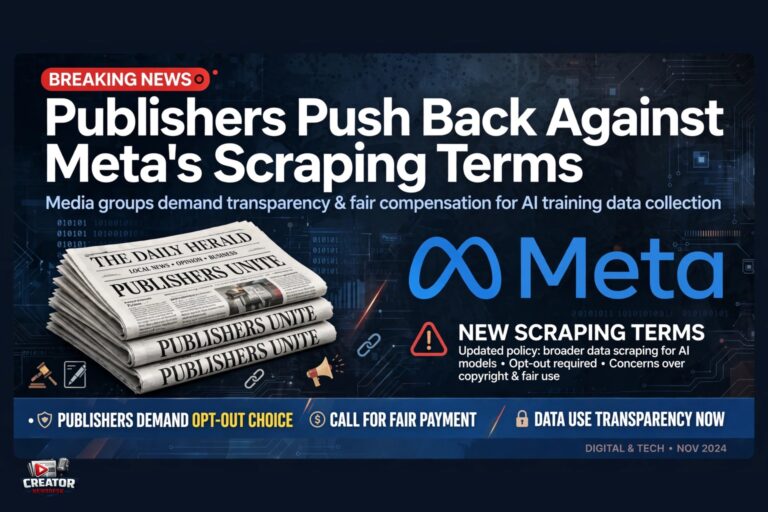
Multiple publisher trade bodies have issued formal letters to Meta in response to its updated scraping terms, signaling growing industry resistance to how the tech giant accesses and uses online content. The move reflects broader unease among digital publishers about unilateral changes to data access policies that could impact how their material is indexed, shared, or monetized across platforms.
According to sources, the collective action underscores a shift toward coordinated advocacy as publishers seek clearer boundaries around automated content harvesting. Rather than addressing individual concerns, trade organizations are aligning to demand transparency and accountability from Meta regarding how scraped data is utilized—particularly in training AI models or powering internal tools.
The letters also call on lawmakers to intervene, suggesting that current regulatory frameworks may be insufficient to prevent potential misuse of publisher content. This appeal highlights a growing belief among creators and media entities that self-regulation by tech firms has failed to protect intellectual property interests in an era of rapid AI development.
For content creators, the dispute raises important questions about consent, compensation, and control over how their work is used in machine learning systems. While Meta has not publicly detailed the specifics of its revised terms, the pushback indicates that many publishers view the changes as overreaching without adequate consultation or opt-out mechanisms.
As the debate unfolds, the outcome could influence future standards for data scraping, AI training practices, and platform-publisher relationships—making it a critical issue for anyone producing digital content at scale. Monitoring regulatory responses and Meta’s next steps will be key to understanding how creator rights evolve in the AI-driven landscape.
Join the conversation
Load Facebook comments to read and reply using your Facebook account.