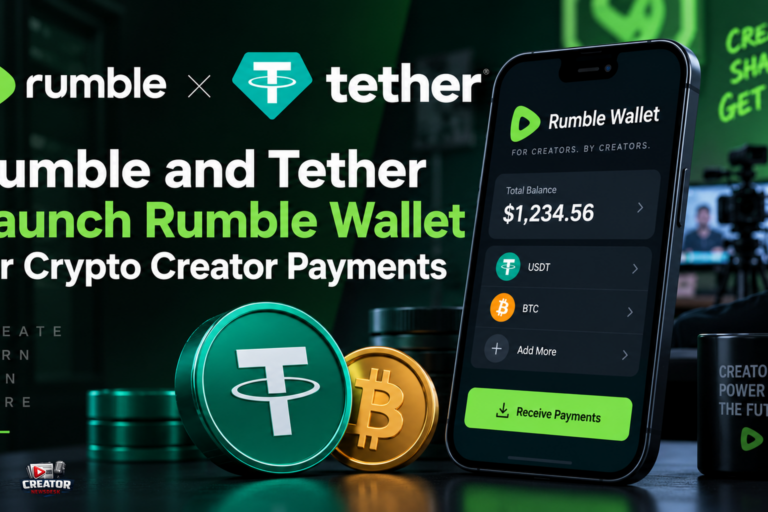
Rumble and Tether launched Rumble Wallet in January 2026, a non-custodial crypto wallet built directly into the video platform to power creator payments. Creators can receive direct peer-to-peer payments from audiences in Tether’s USDT stablecoin, Bitcoin and Tether Gold, without banks, ad-revenue intermediaries or third-party processors. Viewers can tip, subscribe or send payments natively in crypto, with MoonPay providing on- and off-ramps to credit cards, Apple Pay, PayPal and Venmo.
The wallet is self-custodial, meaning users hold their own private keys, and it is built on Tether’s Wallet Development Kit, marking the kit’s first large-scale deployment on a mainstream platform. The launch sits inside a deeper partnership: Rumble announced a $100 million, two-year advertising commitment from Tether starting in the first quarter of 2026, and Tether plans to buy $150 million worth of GPUs from Rumble to build decentralized AI infrastructure.
The pitch to creators is borderless, lower-fee monetization that no advertiser can demonetize. Rumble’s standard positioning already emphasizes higher revenue shares than YouTube’s 55 percent, with 60 percent on its own player and up to 90 percent on licensed distribution, plus a $50 payout threshold versus YouTube’s $100.
The takeaway is diversification, not conversion. Crypto tipping adds a revenue rail immune to ad-policy swings, which is genuinely useful for creators in demonetization-prone niches, but it depends on an audience willing to hold and spend crypto. Creators should enable the wallet as an additional option, keep expectations tied to actual fan behavior, and remember that volatility cuts both ways on payouts held in digital assets.
Join the conversation
Load Facebook comments to read and reply using your Facebook account.
