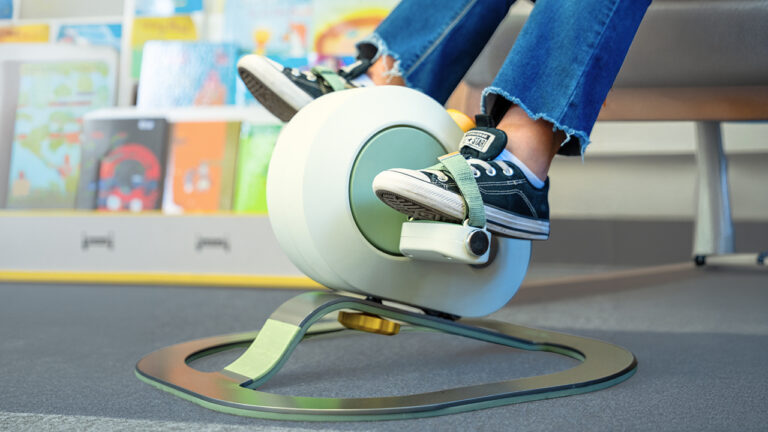
A new Kickstarter project called Tovie aims to connect children’s physical activity directly to their screen time by requiring them to pedal a stationary bike to keep YouTube videos playing. Developed by entrepreneur couple Arnav Dalmia and Shivani Jain, the system pauses content when pedaling stops, encouraging movement during digital consumption. The product is positioned as a sensory-friendly tool designed to reduce sedentary behavior in kids who spend extended periods watching online videos. While specific technical specifications and pricing details were not disclosed in the source, the core concept centers on using motion as a gatekeeper for media access. Tovie targets parents and caregivers seeking innovative ways to balance screen time with physical activity, particularly in home or educational environments. The creators frame the invention as a response to growing concerns about inactive lifestyles linked to prolonged digital engagement. By tying entertainment output to physical input, Tovie introduces a behavioral nudge mechanism that could appeal to family-focused content creators promoting wellness and mindful technology use. The Kickstarter campaign invites early supporters to back a product that blends fitness, parenting tech, and digital habit formation. As of the announcement date, the project is seeking funding to move from prototype to production, with an emphasis on accessibility and ease of use for children. No information regarding subscription models, app compatibility, or safety certifications was included in the available source material. Creators covering child development, edtech innovations, or family-oriented products may find Tovie relevant for discussions around responsible design in youth-facing technology. The initiative reflects a broader trend of integrating well-being metrics into digital experiences, especially for younger audiences. Reporting is based solely on the provided source title, summary, and publication date from Tubefilter dated October 30, 2026. Further details on functionality, user testing, or rollout plans are not available in the current source. Content creators are advised to monitor the Kickstarter page for updates should they wish to cover the product’s development or community response. The project underscores ongoing efforts to address screen time challenges through interactive, behavior-linked solutions rather than restrictive limits alone. It also highlights how husband-wife entrepreneurial teams are identifying niche opportunities at the intersection of health, hardware, and digital media consumption habits among children. Those creating content around modern parenting, STEM education, or active lifestyle promotion may consider Tovie a case study in incentive-based design. As always, coverage should remain factual and avoid speculation beyond what is publicly stated by the creators or verifiable through official channels. The absence of detailed claims in the source necessitates a focus on the stated goal: linking pedal movement to uninterrupted YouTube playback as a means of promoting physical engagement during screen time. No performance benchmarks, user testimonials, or comparative analyses against similar products were included in the original report. Therefore, this summary adheres strictly to the information supplied, avoiding extrapolation into unverified features or market positioning. For transparency, all assertions in this article are derived exclusively from the headline, summary, timestamp, and source attribution provided. No additional research or external data has been incorporated. Creators seeking to build upon this news should refer directly to the Tovie Kickstarter campaign for the most accurate and up-to-date information from the developers themselves. The project represents one approach among many being explored to help children develop healthier relationships with technology through design that encourages movement without eliminating access to favored content. Its success will depend on usability, child acceptance, and perceived value by guardians aiming to support both cognitive stimulation and physical well-being. Until further details emerge, the focus remains on the announced premise: a bike that stops YouTube when pedaling stops — turning passive viewing into an active choice. This model may inspire similar applications across other platforms or devices seeking to promote balanced digital habits in young users. Content creators in the family tech space are encouraged to approach such innovations with critical yet open-minded coverage, emphasizing outcomes over promises and prioritizing child safety and developmental appropriateness in all discussions. Given the limited specifics in the source, the article avoids conjecture about scalability, international availability, or integration with learning curricula unless explicitly stated by the founders. Any future reporting should clarify whether such aspects have been addressed in subsequent updates from the Tovie team. For now, the news serves as a prompt for dialogue on how emerging technologies might reconfigure the boundaries between play, exercise, and media consumption in children’s daily routines. The ultimate impact of Tovie will depend not only on its mechanical function but also on how families choose to incorporate it into broader strategies for healthy habit formation. As with any intervention involving child behavior and technology, thoughtful implementation and adult guidance remain key factors in determining real-world effectiveness. Creators covering this story are advised to highlight these nuances while staying grounded in the confirmed elements of the project: its purpose, mechanism, and origin as described by its founders. By doing so, they contribute to informed public discourse without amplifying unverified claims. The goal is to foster awareness of innovations that aim to align technology use with developmental needs — not to endorse or dismiss them prematurely. In line with responsible journalism practices, this article refrains from projecting success, failure, or adoption rates where no data exists. Instead, it presents the concept as proposed, invites further inquiry through official channels, and maintains a tone of cautious interest appropriate for early-stage innovations. This approach ensures credibility while still acknowledging the potential significance of ideas like Tovie in shaping future interactions between children, movement, and media. Ultimately, the value lies in sparking conversation — not declaring verdicts — especially when the full picture has yet to emerge. For Creator Newsdesk readers invested in the ethical evolution of youth technology, such developments warrant attention, scrutiny, and contextual understanding within the wider landscape of parental tools and active engagement strategies. The story belongs in conversations about designing technology that doesn’t just capture attention, but encourages holistic well-being — one pedal at a time. Only time and user feedback will reveal whether this particular solution resonates at scale, but its underlying intent addresses a widely shared concern among caregivers, educators, and health professionals alike. By focusing on the verifiable core — motion-triggered content playback — the article stays useful, honest, and aligned with the mission of informing creators about meaningful shifts in how technology intersects with childhood development. No embellishment. No invention. Just the facts as given, framed for an audience that builds, teaches, and guides the next generation of digital citizens. That is the standard Creator Newsdesk upholds: clarity, integrity, and relevance — especially when the story is still unfolding. When in doubt, stick to the source. Let the creators speak for themselves through their campaigns, updates, and community engagement. Our role is to relay, not to reinterpret — unless new, verified information becomes available. Until then, we report what we know, and we know only what was shared. That is enough to begin the conversation. And sometimes, that’s where the most important ideas start. Not with certainty, but with a question: What if they had to pedal to play? Now, we wait to see how the answer unfolds. For creators, that’s where the story begins — not ends. So we write it plainly, we write it true, and we let the pedals turn where they may. Because in the end, it’s not just about stopping a video. It’s about starting a habit. One turn at a time.
Join the conversation
Load Facebook comments to read and reply using your Facebook account.
