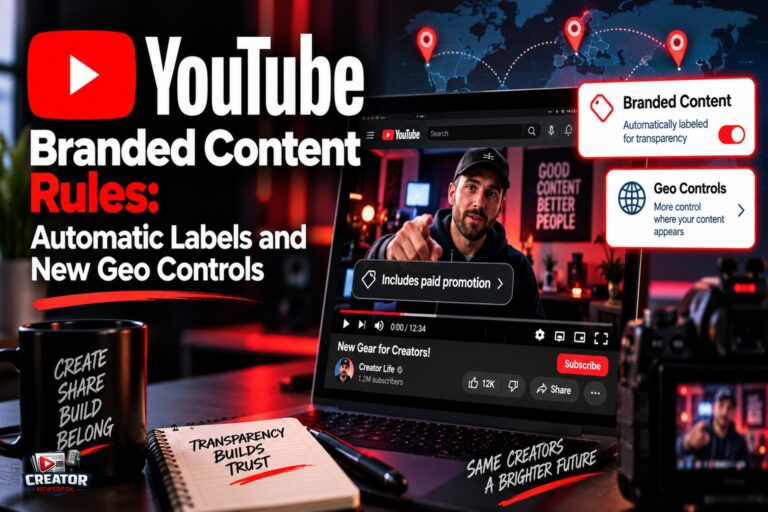
Since September 3, 2026, YouTube has applied automatic branded content labels with age and country limits, and paid product placements now sit under a formal Branded Content Policy. The change shifts disclosure from a manual checkbox creators might forget into a system-level control with geographic and age targeting.
The policy update arrives alongside a push to make brand deals easier to win and run. YouTube Creator Partnerships, which connects creators with advertisers, is now available in 20 countries. Creators can share brand partner access through a one-click code, letting brands view video performance and put paid media behind creator content through Creator Partnerships Boost. Ask Studio will soon help creators respond to brand briefs, develop proactive pitches and customize media kits around a brand’s objectives. YouTube also said it is investing hundreds of millions of dollars in incentives for agency partners to encourage high-impact creator collaborations.
In testing is a more experimental format: dynamic brand segments that let creators insert branded segments across up to 20 long-form videos simultaneously, targeted by region, with a built-in shelf and direct call-to-action button. If it ships broadly, sponsorship stops being a per-video negotiation and becomes programmable inventory.
The takeaway is to professionalize the brand side of the channel now. Check the paid promotion settings on the next upload, build a media kit with audience demographics and past campaign results, and use the one-click partner access instead of screenshotting analytics for brands. Disclosure compliance is no longer optional or manual; the platform enforces it automatically.
Join the conversation
Load Facebook comments to read and reply using your Facebook account.