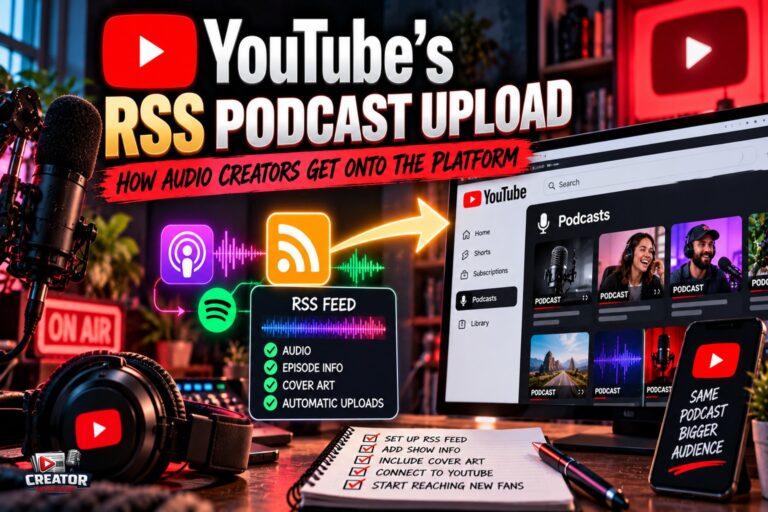
YouTube offers podcasters two distinct paths onto the platform, and choosing the right one shapes everything from production effort to monetization. Path A is native video uploads with full visual control. Path B connects an existing RSS feed, with YouTube automatically converting audio episodes into videos, a low-friction route for audio-first shows that do not want to build a video operation.
The RSS route has real trade-offs. Ingestion is available only in select countries, new episodes should be uploaded as private first so they can be verified before going public, and RSS will not retroactively notify subscribers or refresh episode details the way native uploads do. Static-image episodes converted from cover art typically earn low engagement, though YouTube’s generate-video-from-audio feature offers a middle ground by creating animated visuals without a production setup.
Podcasts designated as podcast playlists in YouTube Studio automatically appear on YouTube Music, where listeners can background-play and download most content without a Premium membership. That audio-first behavior changes the scripting: a podcast episode must work when nobody is looking at the screen, which means intros cannot depend on visuals and visual references need verbal context.
Monetization runs through the standard Partner Program, with audio and video ads, channel memberships, Supers and disclosed sponsorships all available. YouTube is also testing dynamic ad insertion specifically for podcasts, which would let creators monetize episodes with swappable ads the way podcast hosts already do. The takeaway is to decide audio-first versus video-first before publishing a single episode, because the choice determines the workflow, the analytics and the revenue mix for the show’s lifetime.
Join the conversation
Load Facebook comments to read and reply using your Facebook account.
