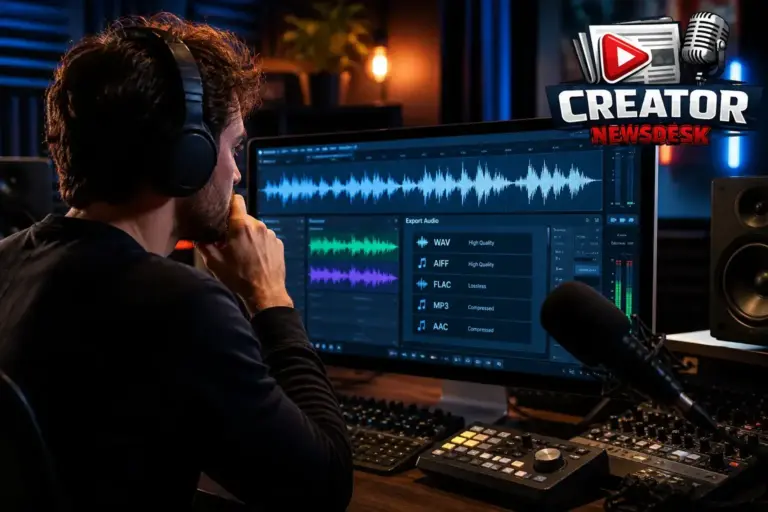
Choosing the right audio format is a everyday decision for podcasters, video producers, and musicians. The format you select influences both the fidelity of your sound and the practical aspects of storage, editing, and sharing. Riverside’s recent guide breaks down the three main categories—uncompressed, lossy, and lossless—to help creators match technical needs with workflow realities.
Uncompressed audio files retain every detail of the original recording, making them the go‑to choice for mastering, archiving, or any situation where preserving the highest possible fidelity is critical. Because they store the full waveform without any reduction, these files tend to be larger, which can impact disk space and transfer times, but they provide a solid foundation for further processing.
Lossy compressed formats reduce file size by discarding audio data that is deemed less perceptible to the human ear. This results in much smaller files that are ideal for streaming, downloading, or delivering content over bandwidth‑limited connections. While some quality is sacrificed, the trade‑off is often acceptable for final distribution where convenience and speed outweigh the need for studio‑grade precision.
Lossless compressed formats strike a middle ground: they shrink the file size without throwing away any audio information, allowing creators to retain original quality while saving storage space. These formats work well during editing phases when you need to move large sessions between collaborators or devices, and they can also serve as a high‑quality delivery option when platforms support them.
Ultimately, the best format depends on the specific stage of your project and the requirements of your target audience. Recording in an uncompressed or lossless format gives you flexibility during editing, while exporting a lossy version may be sufficient for publishing to social media or podcast directories. By consulting Riverside’s guide, creators can weigh factors like quality needs, file management, and platform compatibility to make informed choices that keep their content sounding great and their workflow efficient.
Join the conversation
Load Facebook comments to read and reply using your Facebook account.