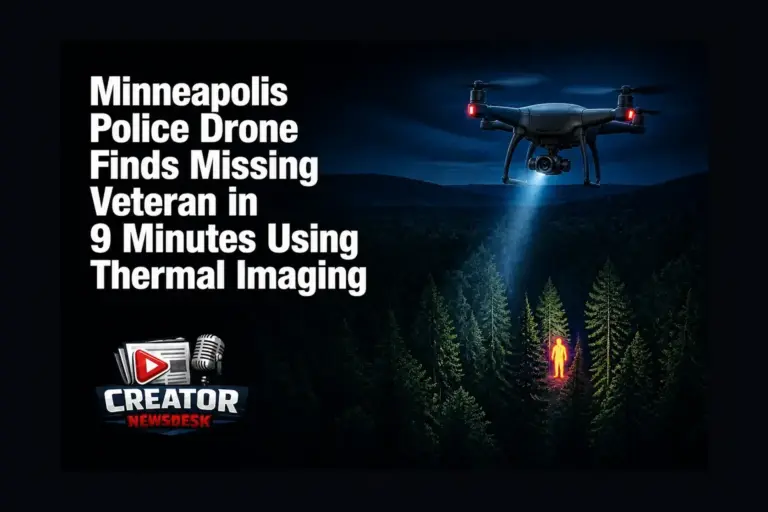
A Minneapolis police drone equipped with a thermal camera successfully located 82-year-old veteran Bob Stewart in a creek ravine in just nine minutes, according to a report by DroneXL dated July 13, 2026. The veteran had been missing for over three and a half hours, during which time ground search teams were unable to find him. The drone’s thermal imaging capability allowed officers to detect his body heat in the challenging terrain, leading to a swift recovery.
The incident highlights the growing role of drone technology in emergency response scenarios, particularly in search and rescue operations where time and visibility are critical factors. Police departments across the country are increasingly evaluating unmanned aerial systems to complement traditional search methods, especially in areas difficult to access on foot.
Minneapolis authorities released the drone footage as part of their transparency efforts, coinciding with the City Council’s consideration of a 75-day trial program involving Skydio Drones as First Responders. The proposed trial aims to assess the effectiveness of integrating drones into initial emergency response protocols.
For content creators focused on public safety tech, drone innovation, or emergency services, this case offers a real-world example of how aerial surveillance tools can significantly reduce response times and improve outcomes in life-threatening situations. The use of thermal imaging, in particular, proves valuable in low-visibility environments such as dense foliage, nighttime operations, or ravines like the one where Stewart was found.
As discussions continue around expanding drone use in municipal services, incidents like this provide tangible evidence of their potential impact—supporting informed debates about funding, policy, and operational integration of unmanned systems in public safety workflows.
Join the conversation
Load Facebook comments to read and reply using your Facebook account.