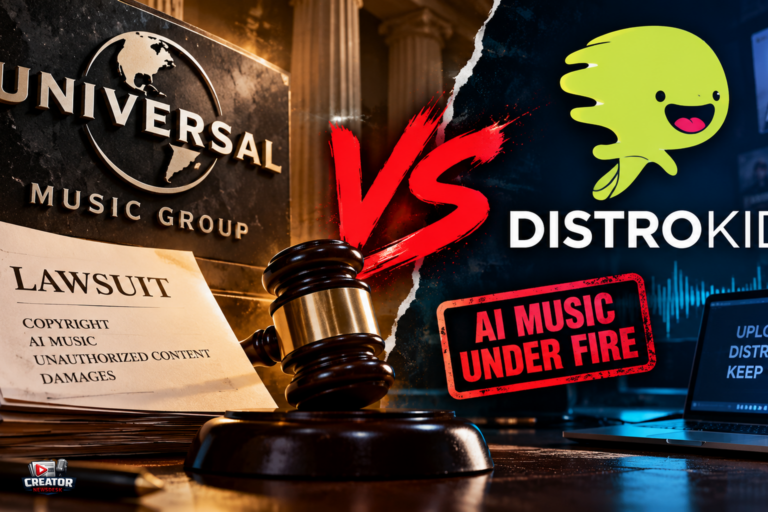
Universal Music Group has filed a 52-page complaint against DistroKid in a Delaware federal court, accusing the independent distributor of enabling AI-generated recordings passed off as human artist releases. Filed September 15, the suit says UMG has already identified nearly 2,000 infringing DistroKid-distributed recordings and expects to find far more.
The case is carefully scoped. It is not a suit against AI music as such, only against AI-generated music distributed as if it were human artist releases. That distinction matters because DistroKid sits at a chokepoint: the company places hundreds of thousands of self-released tracks into streaming systems each year, and industry data suggests the vast majority of AI tracks reaching streaming flow through distributors like it. One mid-2026 industry report found Suno alone appeared in nearly 93 percent of verified AI releases reaching streaming services.
The suit lands inside a wider label strategy that pairs litigation with licensing. While UMG sues Suno over training data and DistroKid over distribution, it is simultaneously signing licensing deals, including its September multi-year AI music agreement with ElevenLabs for a licensed fan remix platform, and Warner has licensed its catalog to Suno directly. The throughline is control: the majors are building a permissioned lane for AI music while using the courts against the unpermissioned one.
Notably absent from the negotiating table are the working musicians and session players whose performances helped train the models, a gap now being contested separately by the American Federation of Musicians in claims against Universal and Warner over per-track and per-stream compensation.
For creators releasing AI-assisted music, the takeaway is to treat distribution hygiene as seriously as production. Do not misrepresent AI-generated tracks as human performances, read your distributor’s terms on AI content before uploading, and keep records of your creative input. The platforms and distributors are where enforcement is landing, and clean metadata plus honest labeling is the cheapest insurance available.
Join the conversation
Load Facebook comments to read and reply using your Facebook account.