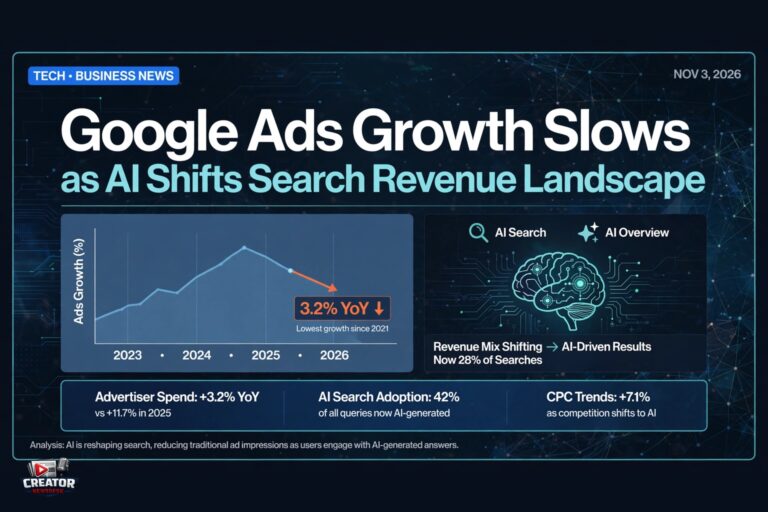
Google’s Q3 2026 earnings report highlights a pivotal shift in its advertising business, with AI Mode beginning to influence search ad performance. While the company continues to generate significant revenue from its core ad platforms, growth rates have slowed, signaling early effects of AI-driven changes in how users interact with search results. The rollout of AI Mode—which delivers synthesized answers directly in the search interface—is reducing the visibility and click-through potential of traditional text ads, a trend now reflected in quarterly financials.
Beyond AI-specific impacts, Google’s ad tech division faces ongoing challenges tied to diminishing returns across its broader ecosystem. Despite investments in automation and audience targeting tools, incremental gains from ad technology optimizations are becoming harder to achieve. This maturing landscape means creators relying on Google’s ad network may see less predictable revenue uplift from standard campaign adjustments or new bidding strategies.
For content creators, these developments underscore the importance of diversifying monetization approaches. As search ad efficiency fluctuates and AI reshapes user behavior, reliance on any single platform’s ad model carries increasing risk. Creators are advised to monitor shifts in traffic sources, explore alternative revenue streams such as subscriptions or branded content, and stay informed about how AI integration affects ad inventory and pricing dynamics across Google’s properties. The full implications of AI Mode on long-term ad sustainability remain under evaluation, but current data suggests a transitional phase in digital advertising economics.
Join the conversation
Load Facebook comments to read and reply using your Facebook account.
