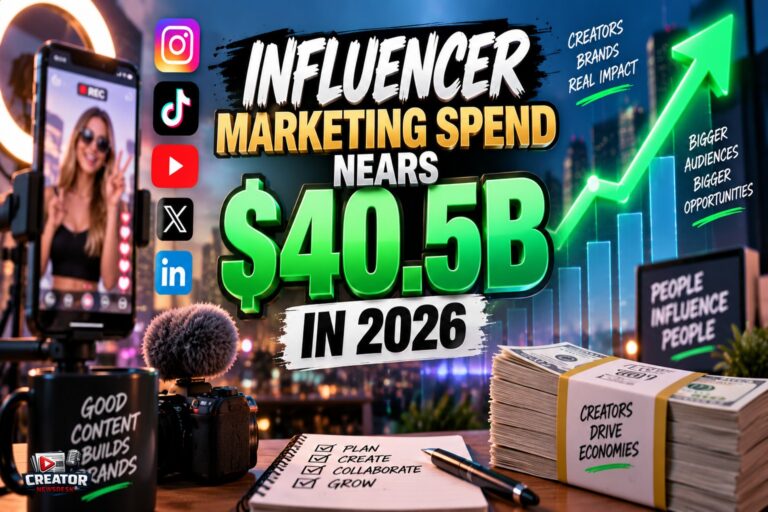
Influencer marketing spend keeps climbing: the global segment is estimated at roughly $32.5 billion in 2025 and projected to approach $40.5 billion in 2026, according to figures aggregated by SocialThink and DemandSage — up from about $1.7 billion in 2016, a sustained ~33% compound annual growth rate over the decade.
The growth reflects a structural shift in advertising budgets. Brands are moving spend from traditional media into creator-led campaigns because creators deliver what display ads increasingly cannot: trusted recommendations inside content audiences actually watch. The US creator economy alone saw an estimated $37 billion in advertising spend during 2025, with $43.9 billion projected for 2026.
For creators, the headline number matters less than where the money concentrates. Mid-tier and top creators capture most brand budgets, with Instagram still commanding higher average fees per post than TikTok — $200-$800 for 10K-50K followers on Instagram versus $100-$500 on TikTok, per 2026 rate comparisons — while TikTok offers more campaign volume.
The maturation also shows in how deals are structured. One-off sponsored posts are giving way to ambassador programs, affiliate layers, whitelisting licenses and performance-based pay. Brands want measurable outcomes, not just impressions.
For creators, a $40 billion market means brand deals remain the single biggest income source for mid-tier and top creators — but competition for those dollars is intensifying as more creators enter the market.
The takeaway for creators: position yourself for the money that is actually growing. Build a media kit with audience demographics and engagement rates, price whitelisting separately, and pitch consistently — brands are spending more with creators every year, and the creators who get the budgets are the ones who make buying easy.
Join the conversation
Load Facebook comments to read and reply using your Facebook account.
